What if the Church erased one of its own leaders because she was a woman? Such is the case with Saint Brigid. As a bishop, her authority was erased. History was rewritten. And on it goes.
L isten on Apple Podcast
CLICK HERE
Catholics Were Never Taught
In this episode of Your Radical Truth, hosted by Deacon Margaret Mary O’Connor, award-winning journalist and author Nancy Fitzgerald brings listeners face to face with a reality that challenges long-held assumptions. Women’s leadership in the early Church was not symbolic or secondary. It existed, it mattered, and it was later deliberately obscured.
At the center of this conversation is Saint Brigid of Kildare, a fifth-century Irish leader whose influence shaped Christianity in Ireland and beyond. Early sources describe Brigid not simply as an abbess or holy woman, but as a bishop who exercised spiritual authority over both women and men.
Why Nancy Fitzgerald’s Voice Carries Weight
Nancy Fitzgerald comes to this conversation with a rare combination of journalistic rigor, theological training, and years of firsthand research. Her reporting has appeared in respected national and Catholic publications, where accuracy, sourcing, and historical accountability matter.
Her work on Saint Brigid is not speculative or ideological. It grew out of graduate-level theological study and repeated research trips to Ireland, where she examined historical records, local traditions, and living practices connected to Brigid’s legacy. The result is a deeply grounded examination of early Christianity that connects scholarship with lived faith.
This matters because conversations about women’s leadership in the Church are too often dismissed as opinion or modern agenda. Nancy’s work brings documented history back into the discussion and asks a harder question. What changes when suppressed evidence is allowed to speak.
The Evidence Was Never Missing
Nancy explains that the repeated claim from Church authorities that there is insufficient evidence for women’s ordination does not hold up under historical scrutiny. The stories of women leaders were preserved in local memory, early writings, and lived tradition. What disappeared was not the evidence, but access to it.
Saint Brigid’s monastery at Kildare functioned as a major center of spiritual leadership. She resisted Roman liturgical norms, prioritized care for the poor, and embodied a gospel-centered faith rooted in action rather than hierarchy.
Faith That Rose From the Ground Up
Nancy’s research took her to Brigid’s holy wells across Ireland. Often hidden in fields or tucked behind stone walls, these wells remain places where people bring prayers, grief, illness, and hope. They reflect a form of faith shaped by ordinary people rather than institutional authority.
Over time, many of these wells were renamed and rededicated, particularly after the Norman invasion, when Rome worked to bring Irish Christianity into conformity. Brigid’s presence was not erased outright. It was absorbed, renamed, and muted.
Brigid’s Mantle and the Power of Refusing Limits
One of Brigid’s most enduring stories is the legend of her mantle. When she requested land to serve a growing community, she asked only for as much ground as her cloak would cover. By morning, it had spread across vast acreage.
The story endures not because of its mythic quality, but because of what it represents. Brigid refused imposed limits and trusted her calling. Others recognized her authority long before institutions moved to contain it.
That symbolism continues today. On the eve of Brigid’s feast day, people still place clothes outside their homes, believing they carry healing and protection.
How Power Reshaped the Church
As Rome consolidated authority, local saints, indigenous practices, and women’s leadership were increasingly marginalized. What had once been relational and community-driven became centralized and controlled.
Nancy and Margaret Mary speak candidly about the silencing that continues today. Parishes are warned against hosting discussions on women’s ordination. Literature is removed. Conversations are shut down. The result is a laity largely unaware that another version of Church history exists.
Why This History Still Matters
The early Church was not always structured as it is now. It was more fluid, more relational, and more closely aligned with the teachings of Jesus. Learning this history is not about rebellion. It is about truth.
Saint Brigid’s story was not lost. It was buried. And as this conversation makes clear, buried truths do not stay silent forever.
About Nancy Fitzgerald
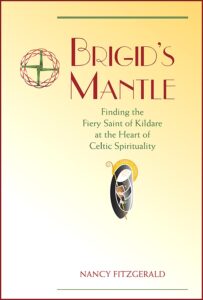
Nancy Fitzgerald is an award-winning journalist specializing in health, wellness, and spirituality. Her articles have appeared in Commonweal, National Catholic Reporter, US Catholic, The Tablet, and Guideposts, as well as Parents, Prevention, The New York Times, and many other publications. Her book Brigid’s Mantle: Finding the Fiery Saint of Kildare at the Heart of Celtic Spirituality was published by Paulist Press. She served on the board of directors of the Women’s Ordination Conference and is editor of their publication New Women, New Church.
About Deacon Margaret Mary O’Connor
Deacon Margaret Mary O’Connor, a member of the Catholic laity, once believed she understood her Church and its teachings. Everything changed the day she uncovered a centuries old scandal of lies and institutional cover up surrounding the history of women in ordained ministry. Realizing that her own Church had hidden the truth about women priests, women deacons, and even women bishops, she felt a deep and unforgettable sense of betrayal.
That moment became the catalyst for her mission. Margaret Mary now travels what she calls the Highway of Radical Truth, exposing the layers of deception that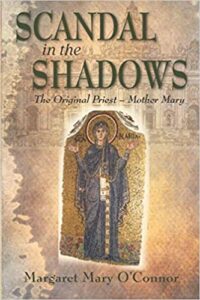 have kept millions of Catholics unaware of the prominent roles women held in early Church history. Her work challenges long held assumptions, confronts the complicity of the hierarchy, and calls Catholics to learn the real history for themselves.
For Margaret Mary, every Catholic deserves the truth. She believes transparency is not optional, especially when the suppression of women’s vocations continues to harm the Church today. Her research shines a spotlight on hidden historical records that may even hold answers to the modern priest shortage.
Often described as a “Modern Day David,” Margaret Mary is relentless in her commitment to revealing what has been intentionally concealed. Through her well researched writings, public advocacy, and ministry within the Celtic Christian Church, she brings these buried truths to light.
She is the author of Scandal in the Shadows and Journey of a Celiac’s Soul, and remains a force for honesty, courage, and reform within the broader Catholic conversation.