Debra Flint on Spiritual and Political Power Abuse Within Catholicism
What happens when a woman dedicates her life to faith, follows a clear calling, and still finds herself shut out by the very institution she serves?

Listen on Apple Podcast CLICK HERE
In this returning episode of Your Radical Truth, host Margaret Mary O’Connor sits down with Debra Maria Flint to discuss her powerful book, No Place for a Woman: The Spiritual and Political Power Abuse of Women within Catholicism.
This is not a surface-level conversation. It is a direct, honest look at what many women have experienced inside the Catholic Church but rarely speak about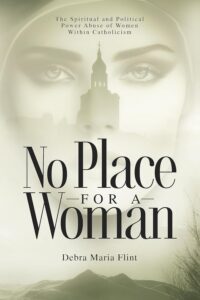 publicly.
A Journey That Began with Faith and Stability
Debra’s path into Catholicism did not begin with tradition or upbringing. Raised in an agnostic family, she found her way to faith during a time when she needed stability the most.
Religion became a grounding force in her life.
That initial connection led to a deeper commitment:
• Conversion to Catholicism at age 21
• Formal study of theology
• A career in safeguarding and social care
• Years of service within Church-related roles
• A calling toward consecrated life
This was not a casual affiliation. It was a life built around purpose, discipline, and devotion.
The Question at the Center: Who Holds Power?
At the heart of this conversation is a question that continues to challenge the Church:
If women played leadership roles in early Christianity, why are they still excluded today?
Debra points to a critical shift in Church history.
Early teachings described the Church as the people of God. Over time, authority became concentrated within the hierarchy, separating leadership from the broader community.
That shift changed everything.
Even reforms that many believed would open doors stopped short of addressing who truly holds power.
History vs. Institutional Narrative
The discussion also explores how historical figures like Mary Magdalene have been represented.
Rather than being recognized for her role as the first witness to the resurrection, her story was altered over time. At one point, she was labeled a prostitute, a claim not supported by original texts.
Debra suggests this reflects a broader pattern of reshaping narratives in ways that diminish women’s influence and authority.
Why Change Feels So Out of Reach
One of the most revealing parts of the conversation is the exploration of why reform is so difficult.
It is not a lack of awareness.
Many within the Church understand the historical role of women and even support change privately.
So what stops progress?
• Fear of division within the Church
• Deeply rooted institutional structures
• Centralized authority that resists disruption
• A culture where speaking out carries consequences
The result is a system where even those who support change often remain silent.
When the System Becomes Personal
After more than five years of preparation, Debra was approved to become the first consecrated widow in Scotland. The date was set. The announcement was made.
Then, without warning, everything changed.
Following the COVID lockdown, and while seriously ill, she was told her consecration would not move forward.
No meaningful explanation. No discussion.
Just a decision.
Years of dedication were dismissed in a matter of moments.
Walking Away Without Losing Faith
Despite what happened, Debra did not walk away from her beliefs.
She now serves as a deacon within the independent Catholic movement while maintaining connections within the Church.
She describes her position as having one foot inside the Church and one foot outside.
More Than Doctrine. This Is About Power
This conversation goes beyond theology.
It is about who gets to lead, who gets heard, and who gets to decide what is valid.
A Conversation That Opens the Door
Debra Flint’s work is about asking necessary questions and creating space for honest dialogue.
In the End
Whether you agree or not, this episode invites you to look deeper at how power operates and what it takes to speak up when something no longer aligns with truth.
About Reverend Debra Maria Flint
Debra was born in Birmingham UK to an agnostic family. She is of both English and Irish descent and also has a Greek step-father. She lived in Greece in her late teenage years and speaks and writes fluent Greek. She converted to Catholicism at age 21 and then studied theology at a Catholic University College where she met her late husband. They moved to Somerset and Debra then went on to train as a nurse and also acquired a second degree in safeguarding. She has post graduate qualifications in management and investigative research. She managed children’s homes for many years before becoming a social care inspector for Ofsted. She was the first Ofsted social care inspector in England to represent Ofsted in court when a company failed to have robust safeguarding procedures in place.
After the death of her late husband in 2014 Debra moved to Scotland and decided to follow a consecrated path within
the Catholic Church. She spent nearly six years exploring the consecrated life before experiencing difficulties in 2020 which led to her leaving both Scotland and the RC Church.
Debra’ first book Look back to the Future: Consecrated Women in Britain 597Ad to date was published in April 2021. Her second book No place for a Woman: the Spiritual and Political Power Abuse of Women within Catholicism was published on 19 March 2024. Since writing this book Debra found it necessary to leave the Roman Catholic Church and now serves as a deacon in the independent Catholic movement. Debra’s third book, which is written with the former priest Paul Murphy Sanderson, is The Sins of Mandatory Celibacy and it was published on 10 December 2025.
https://www.linkedin.com/in/debra-maria-flint-a9a09a211/
https://wipfandstock.com/author/debra-maria-flint/
https://wipfandstock.com/author/debra-maria-flint/
https://lanternpm.org/book-authors/debra-maria-flint/
About Deacon Margaret Mary O’Connor
Deacon Margaret Mary O’Connor, a member of the Catholic laity, once believed she understood her Church and its teachings. Everything changed the day she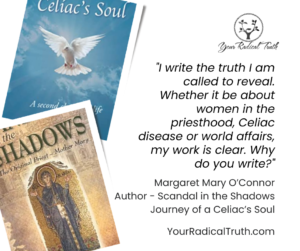 uncovered a centuries old scandal of lies and institutional cover up surrounding the history of women in ordained ministry. Realizing that her own Church had hidden the truth about women priests, women deacons, and even women bishops, she felt a deep and unforgettable sense of betrayal.
That moment became the catalyst for her mission. Margaret Mary now travels what she calls the Highway of Radical Truth, exposing the layers of deception that have kept millions of Catholics unaware of the prominent roles women held in early Church history. Her work challenges long held assumptions, confronts the complicity of the hierarchy, and calls Catholics to learn the real history for themselves.
For Margaret Mary, every Catholic deserves the truth. She believes transparency is not optional, especially when the suppression of women’s vocations continues to harm the Church today. Her research shines a spotlight on hidden historical records that may even hold answers to the modern priest shortage.
Often described as a “Modern Day David,” Margaret Mary is relentless in her commitment to revealing what has been intentionally concealed. Through her well researched writings, public advocacy, and ministry within the Celtic Christian Church, she brings these buried truths to light.
She is the author of Scandal in the Shadows and Journey of a Celiac’s Soul, and remains a force for honesty, courage, and reform within the broader Catholic conversation.