What would Jesus do about ICE?
When I was ordained a deacon, I made a public vow of obedience and a solemn commitment to faithful service to the Word of God and the true teachings of Jesus. That vow was not symbolic. It was not conditional. It was a promise to live the Gospel not only from the pulpit, but in the world as it is, especially where suffering, fear, and injustice are present.
That vow is the reason for this reflection.
The diaconate is a ministry of service. It calls me to stand where the Church meets the wounds of the world, to proclaim the Gospel not as abstraction, but as lived truth. And today, one of the most urgent questions confronting people of faith is this: What does fidelity to Jesus require in a time when fear governs lives and families live under constant threat?
Fear as a Way of Life
Across this country, families are living with a level of anxiety that rarely makes headlines but quietly governs their days. Parents hesitate to drive or go to work. Children carry adult fears, wondering if the people who tucked them in at night will still be there when school ends. Communities learn to keep their heads down, to stay silent, to disappear as a means of survival.
Fear has become a tool of control.
The Gospel Tells a Different Story
Jesus welcomed the stranger.
He fed the hungry.
He healed the sick.
He defended the vulnerable.
He refused to look away from suffering.
Again and again, Jesus crossed boundaries others insisted were absolute. Cultural boundaries. Religious boundaries. Legal boundaries. He did not ask for documentation before offering dignity. He did not demand proof of worthiness before extending mercy. He saw people, not categories.
“I Was a Stranger and You Welcomed Me”
 In Matthew 25, Jesus speaks plainly. “I was hungry and you gave me food. I was thirsty and you gave me drink. I was a stranger and you welcomed me.” There are no qualifications attached. No footnotes. Care for the vulnerable is named as care for Christ himself.
Jesus then makes one of the most radical statements in the Gospels:
“Truly I tell you, whatever you did for one of the least of these brothers and sisters of mine, you did for me.”
Those who failed to act are not condemned for what they believed, but for what they failed to do.
Today, many people are living in a state of chronic fear. This fear is not abstract. It settles in the body. It shows up as anxiety, sleeplessness, hypervigilance, and silence. When terror becomes normalized, it fractures families, erodes trust, and diminishes our shared humanity.
Jesus never used fear as a tool for transformation.
He used love.
Peace Lived, Not Argued
This is why the quiet witness of the Buddhist monks walking for peace carries such profound meaning in this moment. Their walk is not about converting anyone. It is not about political argument or ideological dominance. It is about embodiment. About choosing peace with their bodies. About reminding the world that another way of being human still exists.
Their message echoes the heart of Jesus’ teaching, even though it comes from a different spiritual tradition. Live peace. Walk gently. Do no harm. Refuse to harden your heart. Let compassion be visible.
Jesus did not build his movement through force or intimidation. He built it through love made tangible. He touched those deemed untouchable. He ate with those labeled unworthy. He stood between the accused and the stones. He wept with the grieving. He called peacemakers blessed.
Beyond Borders and Binaries
Our current discourse is often trapped in binaries. Us versus them. Legal versus illegal. Deserving versus undeserving. Safe versus dangerous. These binaries flatten human lives into labels and make it easier to justify cruelty.
Jesus refused binaries.
He met individuals, not categories. He reminded us that dignity is not granted by the state but bestowed by God. He insisted that no human being can be reduced to a single label or legal status.
The monks walking for peace also move beyond binaries. Their presence does not ask us to pick a side. It asks us to choose compassion. It asks us to slow down, to see one another, to remember that peace is not an abstract ideal but a lived practice.
When people say, “This is complicated,” the life of Jesus reminds us that love is not complicated. It is demanding. It is costly. But it is not unclear.
Following Jesus When Fear Rules the Streets
What would Jesus do about systems that rely on fear rather than protection?
He would stand with those who are afraid.
He would welcome the stranger.
He would feed the hungry.
He would challenge structures that dehumanize.
He would call us back to our shared humanity.
In a time when fear rules the streets, choosing compassion becomes a radical act. In a world shaped by division, walking in peace becomes a form of truth.
The monks are walking. Jesus already showed the way.
My vow requires that I ask this question honestly.
And that I follow beyond borders and binaries.
About Deacon Margaret Mary O’Connor
Deacon Margaret Mary O’Connor, a former member of the Catholic laity, once believed she understood her Church and its teachings. Everything changed the day she uncovered a centuries old scandal of lies and institutional cover up surrounding the history of women in ordained ministry. Realizing that her own Church had hidden the truth about women priests, women deacons, and even women bishops, she felt a deep and unforgettable sense of betrayal.
That moment became the catalyst for her mission. Margaret Mary now travels what she calls the Highway of Radical Truth, exposing the layers of deception that have kept millions of Catholics unaware of the prominent roles women held in early Church history. Her work challenges long held assumptions, confronts the complicity of the hierarchy, and calls Catholics to learn the real history for themselves.
For Margaret Mary, every Catholic deserves the truth. She believes transparency is not optional, especially when the suppression of women’s vocations continues to harm the Church today. Her research shines a spotlight on hidden historical records that may even hold answers to the modern priest shortage.
Often described as a Modern Day David, Margaret Mary is relentless in her commitment to revealing what has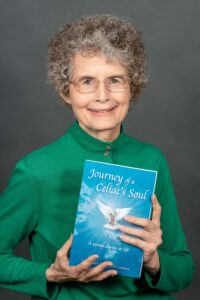 been intentionally concealed. Through her well researched writings, public advocacy, and ministry within the Celtic Christian Church, she brings these buried truths to light.
She is the author of Scandal in the Shadows and Journey of a Celiac’s Soul, and remains a force for honesty, courage, and reform within the broader Catholic conversation.