Nearly one in four Catholic priests worldwide is estimated to have left active ministry over the past several decades, often citing institutional pressures, loneliness, or the demands of mandatory celibacy. While the numbers tell part of the story, the deeper question remains: what has this centuries-old mandate meant for the Church, its clergy, and the faithful?
 Listen on Apple Podcast
CLICK HERE
In this episode of Your Radical Truth, Deacon Margaret Mary O’Connor welcomes Catholic feminist writer and independent Catholic deacon Debra Maria Flint for a candid and historically grounded conversation about one of the most debated disciplines in the Roman Catholic Church: mandatory celibacy. Drawing from her latest book, The Sins of Mandatory Celibacy, Flint examines how theology, power, culture, and politics have shaped the priesthood and influenced the Church’s relationship with women.
From Conversion to Calling
Born in Birmingham, England, into an agnostic family, Debra Maria Flint’s path to faith was anything but conventional. After converting to Catholicism at age 21, she pursued theological studies, trained as a nurse, and built a respected career in safeguarding, management, and investigative research.
Her professional life included managing children’s homes and serving as a social care inspector, where she became the first in England to represent the inspectorate in court over failures in safeguarding procedures. Following the death of her husband, Flint discerned a consecrated life within the Catholic Church before ultimately stepping away after experiencing institutional challenges.
Today, she serves as a deacon within the independent Catholic movement and continues to advocate for reform through her writing.
The Origins of Mandatory Celibacy
Flint explains that celibacy was not originally required of clergy. In early Christianity, many priests were married, creating a church leadership more reflective of the broader community.
According to Flint, the shift toward mandatory celibacy dramatically reshaped Church culture by establishing an all-male, unmarried clerical structure. She notes that Jesus himself did not command celibacy for all disciples, describing it instead as a calling meant for a limited few.
The discussion also explores how translation and interpretation of biblical texts may have influenced later theological positions, raising questions about whether historical agendas shaped doctrine.
Property, Power, and Institutional Control
 One of the more sobering aspects of the conversation centers on the historical motivations behind the celibacy mandate.
Flint points to evidence suggesting that Church leaders sought to prevent property from passing to priests’ wives and children. When the First Lateran Council formalized the prohibition of clerical marriage, many women and families were reportedly left without financial support.
These decisions, Flint argues, were not merely theological but deeply political, consolidating institutional wealth and authority.
A Culture That Shaped the Church
The conversation turns to the broader cultural impact of celibacy. Flint believes the requirement contributed to an elite clerical identity that separated priests from the lived realities of parishioners.
While she is not opposed to celibacy itself, Flint emphasizes that it must be voluntary to hold spiritual integrity. When imposed, she suggests, it can create tension and secrecy rather than devotion.
She also highlights how the absence of women within ordained leadership has influenced Church dynamics, noting that more inclusive leadership could help reshape institutional culture over time.
Women in the Early Church
Historical evidence plays a central role in Flint’s argument for reform.
She references early Christian sources that point to the presence of women deacons and raises the possibility that women held leadership roles before being gradually excluded. Figures such as Phoebe and Mary Magdalene suggest a more expansive understanding of ministry in Christianity’s earliest centuries.
Flint believes that restoring the female diaconate could serve as a meaningful step toward greater representation.
Sexual Abuse and Structural Questions
The episode addresses a difficult but necessary topic: the long history of abuse within Christian institutions.
Flint notes that while misconduct is not unique to Catholicism, a closed and exclusively male clerical culture may heighten risks. Drawing on her safeguarding background, she stresses that balanced leadership and transparency are essential for meaningful change.
For Flint, the introduction of a married priesthood could begin to shift attitudes and reduce systemic pressures.
Reform and Resistance
Both Flint and O’Connor reflect on the tension between hope for reform and institutional caution. Past initiatives have raised expectations only to leave many Catholics disappointed when promised changes failed to materialize.
Flint suggests that meaningful reform requires both courage and persistence, particularly in areas such as clerical marriage and women’s ordination to the diaconate.
Her motivation for writing is clear: to encourage informed dialogue and prompt leaders and theologians to examine the historical record with honesty.
Writing for Change
Flint co-authored The Sins of Mandatory Celibacy with former priest Paul Murphy Sanderson, whose personal experiences provide an insider’s perspective on the human cost of rigid structures.
Despite challenges in securing publishers, Flint remains committed to ensuring these conversations reach readers. Her hope is that the book will inspire thoughtful engagement, especially among those positioned to influence the Church’s future.
A Conversation That Invites Reflection
At its heart, this episode is not simply about policy. It is about people, history, and the evolving understanding of faith.
Flint leaves listeners with a simple but powerful hope: that the book will encourage deeper thinking and that those responsible for guiding the Church might be willing to listen.
As Deacon Margaret Mary O’Connor reminds listeners, Your Radical Truth is a space for exploring the other side of complex issues. This conversation offers both historical insight and an invitation to reflect on what renewal could look like for future generations.
The Sins of Mandatory Celibacy by Debra Maria Flint and Paul Murphy Sanderson is available through Wipf and Stock, Amazon, and major booksellers.
About Reverend Debra Maria Flint
Debra was born in Birmingham UK to an agnostic family. She is of both English and Irish descent and also has a Greek step-father. She lived in Greece in her late teenage years and speaks and writes fluent Greek. She converted to Catholicism at age 21 and then studied theology at a Catholic University College where she met her late husband. They moved to Somerset and Debra then went on to train as a nurse and also acquired a second degree in safeguarding. She has post graduate qualifications in management and investigative research. She managed children’s homes for many years before becoming a social care inspector for Ofsted. She was the first Ofsted social care inspector in England to represent Ofsted in court when a company failed to have robust safeguarding procedures in place.
After the death of her late husband in 2014 Debra moved to Scotland and decided to follow a consecrated path within
the Catholic Church. She spent nearly six years exploring the consecrated life before experiencing difficulties in 2020 which led to her leaving both Scotland and the RC Church.
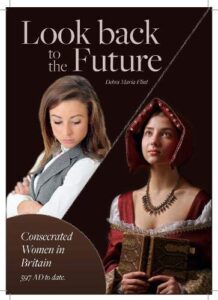
Debra’ first book Look back to the Future: Consecrated Women in Britain 597Ad to date was published in April 2021. Her second book No place for a Woman: the Spiritual and Political Power Abuse of Women within Catholicism was published on 19 March 2024. Since writing this book Debra found it necessary to leave the Roman Catholic Church and now serves as a deacon in the independent Catholic movement. Debra’s third book, which is written with the former priest Paul Murphy Sanderson, is The Sins of Mandatory Celibacy and it was published on 10 December 2025.
https://www.linkedin.com/in/debra-maria-flint-a9a09a211/
https://wipfandstock.com/author/debra-maria-flint/
https://wipfandstock.com/author/debra-maria-flint/
https://lanternpm.org/book-authors/debra-maria-flint/
About Deacon Margaret Mary O’Connor
Deacon Margaret Mary O’Connor, a member of the Catholic laity, once believed she understood her Church and its teachings. Everything changed the day she uncovered a centuries old scandal of lies and institutional cover up surrounding the history of women in ordained ministry. Realizing that her own Church had hidden the truth about women priests, women deacons, and even women bishops, she felt a deep and unforgettable sense of betrayal.
That moment became the catalyst for her mission. Margaret Mary now travels what she calls the Highway of Radical Truth, exposing the layers of deception that have kept millions of Catholics unaware of the prominent roles women held in early Church history. Her work challenges long held assumptions, confronts the complicity of the hierarchy, and calls Catholics to learn the real history for themselves.
For Margaret Mary, every Catholic deserves the truth. She believes transparency is not optional, especially when the suppression of women’s vocations continues to harm the Church today. Her research shines a spotlight on hidden historical records that may even hold answers to the modern priest shortage.
Often described as a “Modern Day David,” Margaret Mary is relentless in her commitment to revealing what has been intentionally concealed. Through her well researched writings, public advocacy, and ministry within the Celtic Christian Church, she brings these buried truths to light.
She is the author of Scandal in the Shadows and Journey of a Celiac’s Soul, and remains a force for honesty, courage, and reform within the broader Catholic conversation.