
For many years I have found myself returning to the same question, not because it is controversial, but because it refuses to go away.
What happens when someone sincerely believes God is calling them to ministry, yet the institution they love insists that calling cannot exist?
As host of the Your Radical Truth podcast, I have had the privilege of speaking with women from many Christian traditions. Some have been ordained through Independent Catholic communities. Others serve in Anglican, Episcopal, Lutheran, Methodist, and Protestant denominations where women have long been accepted as pastors and priests. Still others remain devoted members of the Roman Catholic Church, quietly carrying 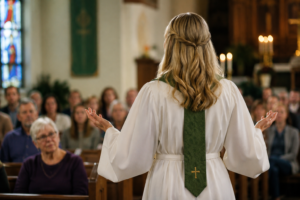 a vocation they have discerned over many years while knowing they will never be permitted to answer it within the institution they love.
Although each woman’s story is unique, I continue to hear a remarkably consistent message. None of these women sought ministry because they desired prestige or authority. They describe something much deeper. They speak of an inner conviction that God has invited them into a life of service.
That distinction deserves careful consideration.
A Calling Is Not Self-Appointed
Throughout Scripture we encounter men and women who were surprised by God’s invitation. Moses questioned his ability. Jeremiah believed he was too young. Mary questioned how God’s plan could possibly unfold through her life.
Rarely do those whom God calls describe the experience as a personal ambition. Instead, they speak of a persistent invitation that continues long after it would have been easier to walk away.
The women I have interviewed describe that same persistence. Some resisted their calling for years. Others tried to convince themselves they had misunderstood. Yet the invitation remained.
It raises an important question for all of us. If we believe that God continues to call people today, are we prepared to recognize that calling even when it challenges our expectations?
Looking Again at the Ministry of Jesus
One of the reasons this conversation remains so important is because the ministry of Jesus consistently elevated those whom society often overlooked.
Jesus welcomed women into His circle of followers. He taught them publicly at a time when many religious leaders would not. Women remained present at the crucifixion when many others fled in fear. It was Mary Magdalene who first proclaimed the Resurrection, becoming the first witness to Christianity’s defining event.
These are not insignificant moments tucked away in Scripture. They reveal the remarkable trust Jesus placed in women and the important role they played in the earliest Christian community.
Over the centuries, however, much of the conversation surrounding women in Church leadership has focused almost exclusively on what women cannot do, rather than examining the ways women have faithfully served Christ throughout Christian history.
History Deserves an Honest Examination
During my years of studying early Christianity, I discovered that the history surrounding women in the Church is far more complex than many Catholics realize.
Biblical scholars, historians, and theologians continue to explore evidence of women serving as leaders, teachers, deacons, patrons of house churches, and influential figures within the earliest Christian communities. While scholars may differ on specific interpretations, there is broad agreement that women played a far more significant role than is often acknowledged.
History is not weakened by asking questions. It is strengthened by them.
As Catholics, we should never fear honest scholarship. If our faith is rooted in truth, then careful historical examination should deepen our understanding rather than diminish it.
The Fruits of Their Ministry
One principle Jesus repeatedly emphasized was that we would recognize people by the fruit of their lives.
That teaching has stayed with me as I have interviewed women serving in ministry.
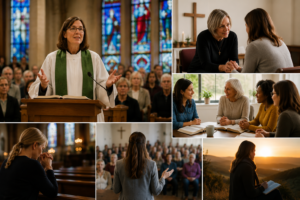 I have spoken with women who comfort grieving families, guide people through profound spiritual experiences, minister to those experiencing homelessness, advocate for justice, build vibrant faith communities, and help others develop a deeper relationship with Christ.
When I listen to their stories, I find myself paying less attention to institutional titles and more attention to the lives being transformed through their ministry.
The question becomes less about permission and more about fruitfulness.
Moving Beyond Fear
Too often, conversations about women’s ordination become polarized before anyone has truly listened to one another. The discussion quickly shifts into debates over authority, tradition, or institutional change, leaving little room to consider the lived experiences of women who have spent years discerning what they believe is God’s call.
The women I have met are not driven by a desire for position or recognition. They are deeply committed Christians whose lives reflect a sincere love for Jesus Christ and a profound respect for the Church. Many have remained faithful despite misunderstanding, criticism, or exclusion. They continue to serve because their commitment is rooted in vocation rather than personal ambition.
That is why I believe this conversation deserves more than slogans or assumptions. Before deciding awhether someone is right or wrong, we should first be willing to listen to their story. Discernment has always been an essential part of the Christian tradition, and genuine discernment requires humility, prayer, and the willingness to hear experiences that may challenge our own understanding.
Whether one ultimately agrees that women should be ordained is not the only question before us. We should also ask whether we have taken the time to honestly hear the voices of women who believe they have been called by God. Their experiences, their ministries, and the fruits of their service deserve thoughtful consideration rather than immediate dismissal.
Listening for the Holy Spirit
The Holy Spirit has often led the Church in unexpected directions.
Throughout history, the Church has grown, developed, corrected misunderstandings, and deepened its understanding of many aspects of faith. None of those developments occurred because difficult questions were avoided. They happened because faithful people were willing to seek God’s guidance with humility.
Perhaps this conversation belongs in that same tradition.
The question before us is no longer whether women experience a call to ministry. After countless conversations, I have no doubt that many do.
The real question is whether we are willing to listen carefully enough to discern what God may be saying through them.
My hope is not that everyone reaches the same conclusion overnight. My hope is that we become willing to engage this conversation with honesty, charity, and an openness to the possibility that God is still speaking.
Because if history has taught us anything, it is that God’s work has often begun with people courageous enough to listen before the rest of the world was ready to hear.
Many Voices on the Podcast
Be sure to listen to the many women I have interviewed on the Your Radical Truth Podcast. Go to www.YourRadicalTruth.com/podcast