There comes a time in the life of the Church when remaining silent is no longer an option.
As Christians, our first allegiance is not to an institution, a movement, or even a cherished tradition. Our first allegiance is to Jesus Christ, who taught us to walk in truth, justice, humility, and love. Whenever an organization claiming to represent God becomes the subject of repeated allegations of manipulation, abuse, secrecy, or exploitation, we have a moral responsibility to ask difficult questions. Doing so is not an attack on the Church. On the contrary, it is an expression of our love for the Church and our desire to see it reflect more faithfully the teachings of Christ.
One such organization is Opus Dei.
For many Catholics, the name is familiar but poorly understood. Some recognize it from headlines or bestselling novels. Others know it simply as a Catholic organization dedicated to prayer, work, and holiness. Yet beneath that public image lies a growing body of testimony from former members, investigative journalists, historians, and abuse survivors whose experiences paint a far more troubling picture.
This article is not intended to condemn every individual who belongs to Opus Dei. Many sincere people have undoubtedly joined because they genuinely desired to deepen their relationship with God. Rather, this is an invitation to examine serious concerns that have emerged over many decades and to ask whether any religious organization should be beyond honest scrutiny.
What Is Opus Dei?
Opus Dei, Latin for “Work of God,” was founded in Spain in 1928 by Father José María Escrivá. His central message was that ordinary work could become a path to holiness. Rather than separating faith from everyday life, he encouraged people to find God in their professions, family responsibilities, and daily routines. In many respects, that message resonates with Christians of every denomination.
Over time, however, Opus Dei grew into one of the most influential organizations within the Catholic Church. It established schools, universities, retreat centers, and residences throughout the world while developing a reputation for attracting highly educated professionals, business leaders, politicians, and wealthy benefactors.
Supporters often describe Opus Dei as a faithful movement committed to spiritual discipline and personal sanctity.
Former members often describe something very different.
Over the past several decades, numerous former members have alleged that behind its public image exists a culture marked by excessive control, rigid obedience, secrecy, and psychological manipulation. While Opus Dei disputes many of these allegations, the remarkable consistency of survivor accounts across multiple countries deserves careful consideration.
Faith Should Never Require Fear
There is an important distinction between authentic faith and unhealthy control.
The Gospel consistently shows Jesus inviting people to follow Him. He never forced belief. He never manipulated people through fear. He never suggested that questioning human authority was equivalent to rejecting God Himself.
Healthy faith encourages people to grow spiritually while maintaining their dignity, their freedom, and their ability to think critically. Healthy religious communities welcome honest questions because truth does not fear examination.
By contrast, many former members of Opus Dei describe an environment in which obedience became the highest virtue and independent thinking was often discouraged. Some recount being taught that leaving the organization meant abandoning God’s will for their lives. Others describe living under a constant fear that questioning leadership could jeopardize their salvation.
If these accounts are accurate, they reveal something profoundly different from the freedom Christ proclaimed.
Faith rooted in love draws people toward God.
Faith rooted in fear often drives them away.
The Allegations That Cannot Be Ignored
No single testimony should determine our opinion of an organization. However, when similar experiences emerge from former members across Ireland, Spain, Argentina, Australia, the United States, and numerous other countries, they warrant serious attention.
Among the allegations repeatedly raised are the recruitment of children and teenagers before they possessed the maturity to make lifelong commitments, the discouragement of close relationships with family members, restrictions on reading materials and outside information, intensive monitoring of members’ daily lives, psychological pressure to remain obedient, and the use of guilt and fear as tools of spiritual formation.
Former members have also described revealing deeply personal thoughts during regular spiritual direction sessions, only to feel that this information was later used to shape or influence their decisions. Others have alleged strict oversight of finances, friendships, education, and career choices.
These accounts do not describe occasional excesses by isolated individuals. Rather, they suggest a pattern that has surfaced repeatedly over many years.
That alone should concern every Catholic who believes the Church must always place human dignity above institutional reputation.
The Assistant Numeraries
Perhaps the most disturbing allegations involve women known as Assistant Numeraries.
These women traditionally worked in Opus Dei centers preparing meals, cleaning residences, doing laundry, and maintaining the homes where other members lived. While there is nothing inherently wrong with domestic work, many former Assistant Numeraries allege they were recruited as teenagers with promises of education and opportunity, only to discover that their lives would consist almost entirely of unpaid or poorly compensated domestic labor carried out under strict supervision.
Some describe living highly regimented lives in which nearly every hour of the day was scheduled. Others recount having little privacy, limited contact with family, and virtually no opportunity to pursue independent careers or education.
Several former Assistant Numeraries have since filed legal complaints and spoken publicly about what they believe amounted to exploitation. Their willingness to come forward has sparked renewed international attention and prompted greater public examination of Opus Dei’s internal practices.
Whether every allegation is ultimately substantiated will be determined through appropriate legal and ecclesiastical processes. Yet the courage of these women deserves recognition, and their experiences deserve to be heard with respect rather than dismissed out of hand.
When Religion Distorts the Image of God
Perhaps the deepest wound described by many former members is not physical exhaustion or lost opportunities.
It is the image of God they carried away.
Numerous survivors speak of believing that God demanded unquestioning obedience to Opus Dei. Leaving the organization was portrayed as abandoning one’s vocation and risking eternal separation from God. For young people who entered as teenagers, these teachings often became deeply ingrained.
When fear replaces love as the primary motivation for faith, something essential has been lost.
Throughout the New Testament, Christ repeatedly reassures His followers, calling them not to fear but to trust. His ministry consistently elevated the dignity of every person He encountered. He challenged religious leaders whenever rules and authority overshadowed compassion.
That example should remain the standard by which every religious organization is measured.
Corporal Mortification and Free Consent
One issue that frequently receives public attention involves the practice of corporal mortification. Historically, certain forms of self-denial have existed within Christian spirituality for centuries, and Opus Dei has acknowledged that some members voluntarily undertake practices such as wearing a cilice or using a discipline.
The real question, however, is not whether these practices exist.
The question is whether they are freely chosen by mature adults without coercion or psychological pressure.
Former members have alleged that they were introduced to these practices while still very young and under intense spiritual influence. If those accounts are accurate, genuine freedom of consent becomes a serious concern.
Any meaningful sacrifice offered to God must arise from freedom.
Without freedom, sacrifice loses its spiritual meaning.
Why Secrecy Matters
One of the recurring themes found throughout survivor testimony is secrecy.
Former members have described restrictions on discussing internal practices with outsiders, monitored correspondence, limited access to outside information, and discouragement from maintaining close relationships with former members.
Healthy organizations welcome transparency because transparency builds trust.
Secrecy, on the other hand, often creates environments where harmful practices can continue unnoticed for years.
This is why accountability matters so deeply.
No organization, regardless of its history or reputation, should be insulated from honest examination.
Investigative Journalism Has Changed the Conversation
For many years, survivor accounts remained largely isolated. Individual stories were often dismissed or overlooked.
That has changed dramatically in recent years thanks to the work of investigative journalists who have spent years examining financial records, historical documents, internal correspondence, and survivor testimony.
Among the most significant contributions has been the work of journalist Gareth Gore, whose extensive investigation into Opus Dei has brought renewed international attention to allegations involving governance, finances, recruitment practices, and the treatment of members.
Good journalism does not weaken the Church.
It strengthens it by helping expose wrongdoing wherever it exists.
History has repeatedly demonstrated that institutions become healthier when they are willing to confront uncomfortable truths rather than conceal them.
Signs That the Vatican Is Paying Attention
Recent developments suggest that concerns surrounding Opus Dei are receiving greater attention within the Vatican.
Under Pope Francis, Opus Dei’s unique canonical status was modified, reducing some of the extraordinary autonomy it had previously enjoyed. While many viewed these changes as administrative in nature, others interpreted them as recognition that greater oversight and accountability are necessary.
The review of Opus Dei’s governing statutes continues, and many survivors hope it will result in meaningful reform rather than cosmetic change.
Whether further action follows remains to be seen.
What is clear, however, is that conversations once confined to former members are now occurring within the broader Church.
That alone represents significant progress.
The Church Is Strongest When It Embraces Truth
One of the greatest mistakes any institution can make is to confuse criticism with hostility.
Throughout Christian history, many of the voices calling most passionately for reform were people whose love for the Church was beyond question. They challenged corruption not because they wished to weaken the Church but because they believed Christ deserved better from those who served in His name.
The same principle applies today.
As Catholics, we should never fear honest examination. If allegations prove unfounded, they should be answered openly and transparently. If wrongdoing has occurred, then accountability and repentance are not signs of weakness. They are expressions of genuine faith.
Protecting an institution can never take precedence over protecting people.
Looking Ahead
The conversation surrounding Opus Dei is far from over.
As more former members find the courage to tell their stories, the Church has an opportunity to listen with humility, compassion, and integrity. Every testimony deserves to be evaluated fairly, every allegation deserves appropriate investigation, and every person deserves to be treated with dignity.
In the coming days on Your Radical Truth podcast, I will be joined by a remarkable woman whose personal journey inside Opus Dei offers an intimate look at life within one of the Catholic Church’s most controversial organizations. Her story is one of resilience, courage, and ultimately, freedom.
Our conversation explores what drew her into Opus Dei as a teenager, what she experienced during her years inside the organization, and how she eventually found the strength to reclaim her life.
Whether you are Catholic, belong to another faith tradition, or simply care about truth and human dignity, I believe this is a conversation worth hearing.
I invite you to watch for this upcoming episode of Your Radical Truth. Sometimes the first step toward healing begins by listening to someone who found the courage to speak the truth.
About Deacon Margaret Mary O’Connor
Deacon Margaret Mary O’Connor, a member of the Catholic laity, once believed she understood her Church and its teachings. Everything changed the day she uncovered a centuries old scandal of lies and institutional cover up surrounding the history of women in ordained ministry. Realizing that her own Church had hidden the truth about women priests, women deacons, and even women bishops, she felt a deep and unforgettable sense of betrayal.
That moment became the catalyst for her mission. Margaret Mary now travels what she calls the Highway of Radical Truth, exposing the layers of deception that
have kept millions of Catholics unaware of the prominent roles women held in early Church history. Her work challenges long held assumptions, confronts the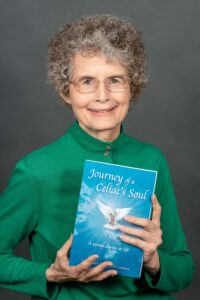 complicity of the hierarchy, and calls Catholics to learn the real history for themselves.
For Margaret Mary, every Catholic deserves the truth. She believes transparency is not optional, especially when the suppression of women’s vocations continues to harm the Church today. Her research shines a spotlight on hidden historical records that may even hold answers to the modern priest shortage.
Often described as a “Modern Day David,” Margaret Mary is relentless in her commitment to revealing what has been intentionally concealed. Through her well researched writings, public advocacy, and ministry within the Celtic Christian Church, she brings these buried truths to light.
She is the author of Scandal in the Shadows and Journey of a Celiac’s Soul, and remains a force for honesty, courage, and reform within the broader Catholic conversation.